
On 26 October Brussels launched the T-MED investment platform with up to EUR 4.5 billion of EU guarantees. Two 100 MW Tunisian solar plants are among its first showcase projects, backed with EUR 172 million of support. The capital is coming; the question now is which projects are ready to take it.
A smaller envelope, the same ambition
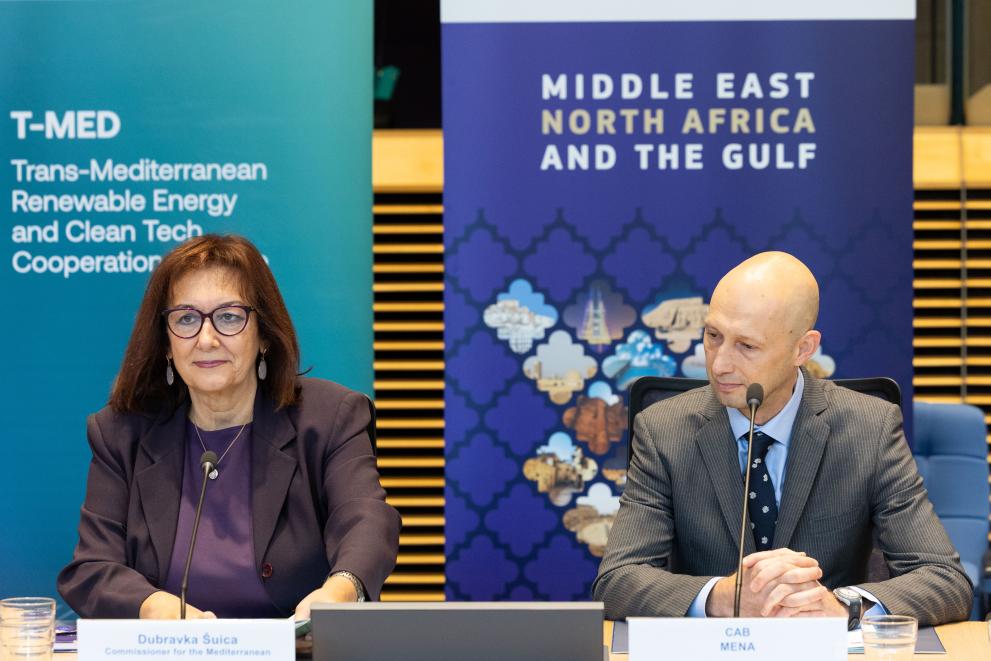
Announced on 9 June 2026 at EU Sustainable Energy Week, T-MED sits under the Pact for the Mediterranean. Its investment platform, presented in Brussels by Commissioner for the Mediterranean Dubravka Šuica, opens with up to EUR 4.5 billion of guarantee capacity under the European Fund for Sustainable Development Plus (EFSD+). In June the Commission had spoken of EUR 5 billion: the envelope is about 10% smaller, and the launch came a month later than planned, Agence Europe reports.
The mobilisation target has not moved: up to EUR 25 billion of investment by 2035, or roughly EUR 5.6 expected for every euro of guarantee. The scope covers renewable generation, hydrogen, grids, storage, interconnections and clean tech manufacturing. Beyond guarantees, the platform promises support on regulatory frameworks, permitting, grid access and power purchase agreements.
Tunisia: 200 MW of solar and EUR 172m as a showcase
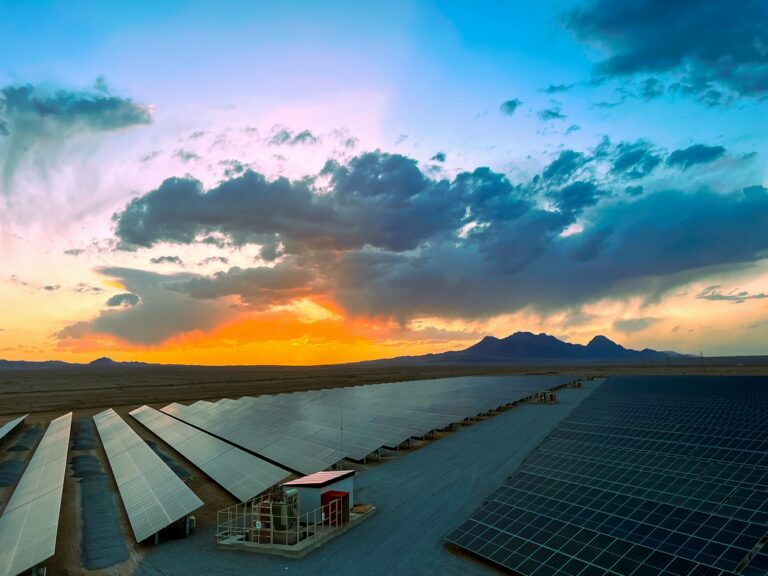
Among the projects the Commission highlighted are two Tunisian PV plants of 100 MW each, with their transmission works, associated with EU support of around EUR 92 million and EUR 80 million. Neither the sites nor the instruments were disclosed. Egypt fills the rest of the window, with a EUR 1.6 billion grid modernisation programme, a green ammonia project at Ain Sokhna, a hybrid solar project and 500 MW of onshore wind in the Gulf of Suez.
For Tunisia, scale matters. The country passed 1,000 MW of installed renewable capacity in 2026, covering at most 9% of its electricity, while 97% of its energy dependence rests on natural gas, according to La Presse. At that level, the two plants cited in Brussels alone equal close to a fifth of the existing renewable fleet. The national targets, 35% renewable electricity by 2030 and 50% by 2035, call for a build-out pace far beyond anything the last decade has seen.
Capital is no longer the first constraint
The Commission says so itself: the platform will run regular calls for expressions of interest to identify mature projects. That is the operative word. An EFSD+ guarantee lowers the cost of risk; it does not turn an immature project into a bankable asset. Credit committees will look at the same things they look at today, just with more appetite:
- Land: secured title, cleared easements and access, no residual disputes.
- Grid: connection study with STEG, identified injection point, known cost and schedule for the grid works.
- Resource: a wind measurement campaign or validated irradiation data, with P50/P90 figures that stand up to an independent engineer.
- Environmental and social: an impact study built to lender requirements, not only to the national framework.
- Contracts: a clear offtake framework and a risk allocation compatible with non-recourse debt.
Projects that tick these boxes when the platform starts routing its first files will have a timing advantage that is hard to close. The rest will find that available guarantees shorten neither a measurement campaign nor a land survey.
Wind, the other half of the pipeline
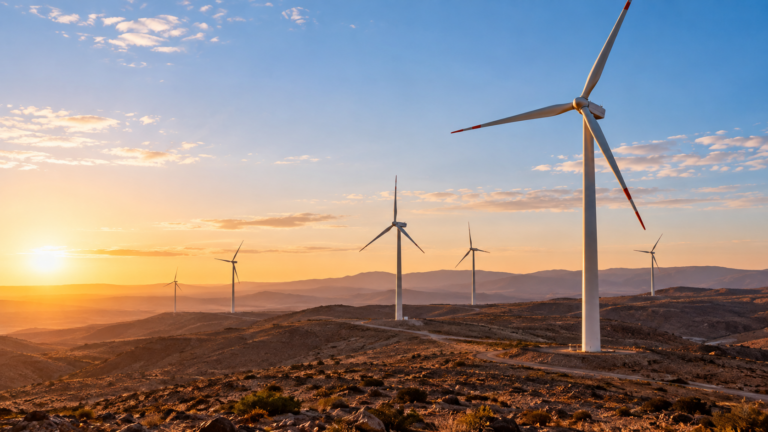
Tunisia’s T-MED showcase is all solar. The national pipeline is not. The 2026 programme cleared by the High Committee for Private Electricity Generation includes about 2 GW of wind, with 1,200 MW already sited at Tabaga, Jebel Abderrahmane and El Guettar, alongside the 350 MW solar-plus-storage project at Bazma, Industrial Info reports. Egypt’s 500 MW in the Gulf of Suez show that wind has its place on the platform. For an investor, holding both technologies in one market also smooths the production profile and the resource risk.
Where to look
For an investor discovering Tunisia through T-MED, the task is not to find announced megawatts but developed ones: projects whose technical, land and permitting work has already absorbed most of the upstream risk, and which now need equity and a financing structure. That segment is still narrow, but it exists. AIUS, for instance, is leading the pre-development of two such projects, a 100 MW solar plant and a 75 MW wind farm, 175 MW built from the outset to the standards international lenders apply in Tunisia.
Tunisia now has a point Brussels has made public for it: two 100 MW plants solid enough to serve as a reference. What follows will be measured by how many projects can take the same path, and how quickly.
AIUS works as a local technical partner to international developers, investors, integrators and EPC contractors in Tunisia and North Africa, and provides technical advisory, due diligence, development and financial close support, project management and construction supervision through to commissioning, as well as bid management. If you are looking at the Tunisian market through T-MED, we are available to discuss it.
Photo: © European Union, 2026