
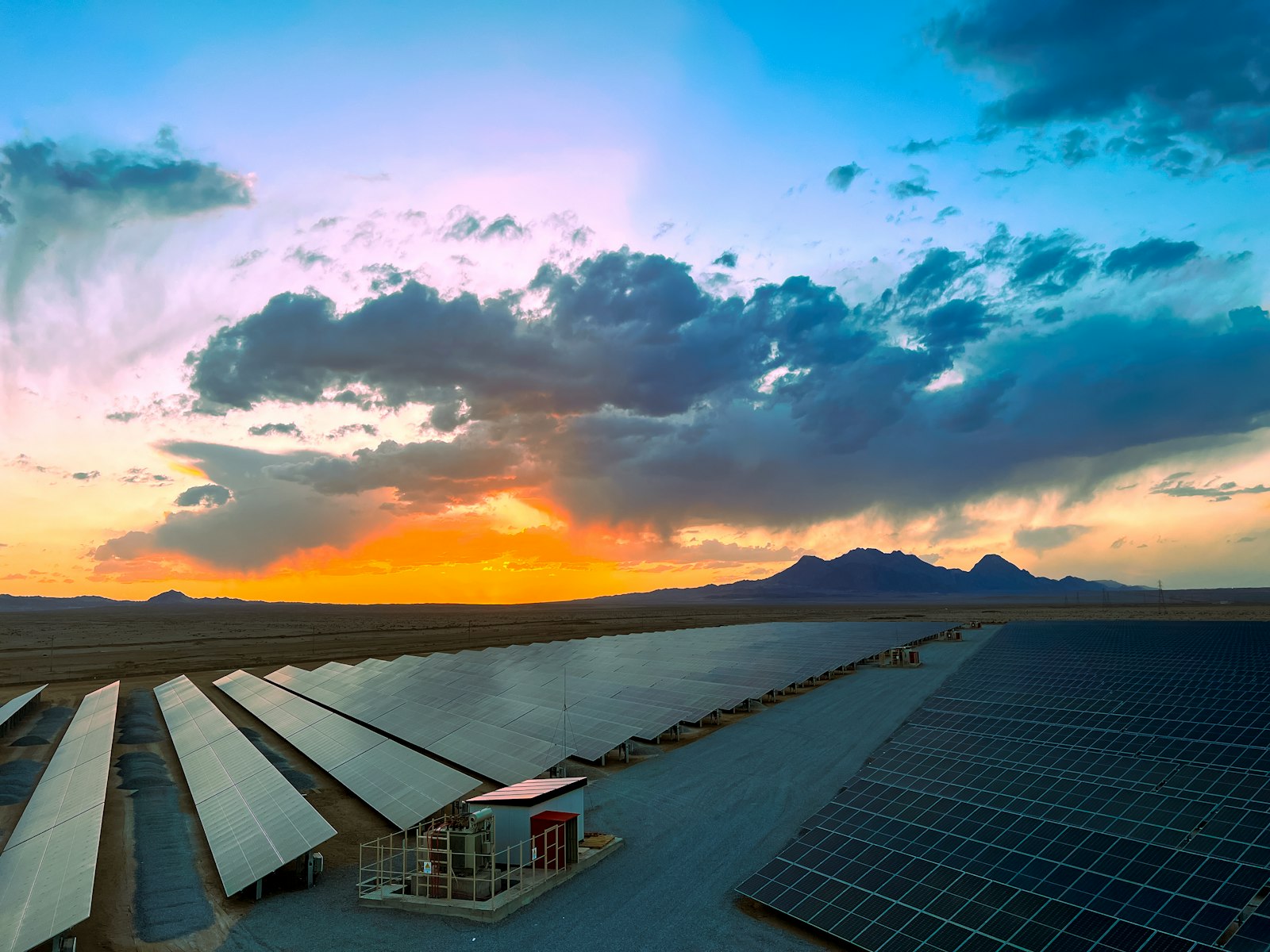
On 9 October 2026, STEG opened international tendering for a 50 MWac solar plant with a 10 MW / 20 MWh battery energy storage system at Beni Mhira, in the governorate of Tataouine. The project is financed by the EBRD and the Clean Technology Fund, and the EBRD describes it as Tunisia’s first utility-scale battery deployment. Tenders are due in December 2026.
The same day, a restricted ministerial council on the national energy plan listed Beni Mhira among STEG’s short-term priorities, alongside the 300 MW / 600 MWh network battery programme, 200 MW of gas engines, the third gas turbine at Borj El Amri and a 200 MW solar plant with 100 MWh of storage, also in Tataouine. The battery at Beni Mhira is small. What it will settle is not.
Key terms
| Employer | STEG |
| Site | Beni Mhira, about 40 km from Tataouine town, flat terrain |
| Solar plant | 50 MWac, bifacial modules |
| Battery | 10 MW / 20 MWh lithium-ion (2 hours), with BMS, PCS and thermal management |
| Grid connection | 33/225 kV substation on site, about 1.2 km of 225 kV line to the Tataouine–Rouis line |
| Expected output | 118.6 GWh per year |
| Financing | EBRD sovereign-guaranteed loan up to €30 million and €20 million concessional loan from the CTF Global Energy Storage Programme, tenor up to 18 years |
| Contract | Single turnkey design-build contract, FIDIC Yellow Book |
| Completion period | 18 months |
| Procurement | Open international tender under EBRD rules, published on ECEPP on 9 October 2026 |
| Tender deadline | December 2026 |
Energy security first
Natural gas produced around 91% of Tunisia’s electricity in 2024, and close to half of that gas arrives from Algeria through a single corridor. Renewables sit near 9% of generation against a 35% target for 2030, a target the Head of Government restated at the 9 October council. Each kilowatt-hour of solar that can be stored and delivered when the system needs it is a kilowatt-hour of imported fuel not burned at a peak.
The plant is expected to produce 118.6 GWh a year, a specific yield of about 2,372 kWh per kWac, and to save around 29 ktoe of natural gas annually. Batteries in this setting are a fiscal and supply-security tool before they are a climate one.
From megawatts to flexibility
The south of Tunisia has the sun and the land. What it lacks is the ability to move that energy to where and when it is needed. Adding capacity is no longer the only question; absorbing it is. That means avoiding curtailment at midday, holding frequency when cloud passes over a large plant, and carrying solar output into the evening peak. Peak demand reached 6,400 MW in July 2026, and the government plan aims to connect about 300 MW of new renewable capacity before summer 2027.
Storage is one half of the answer. The other is the grid: ELMED, the 600 MW HVDC link to Italy, and the reinforcement of north–south transfer capacity for southern renewable projects. Beni Mhira sits at the point where both meet, with its own 225 kV connection a little over a kilometre from the Tataouine–Rouis line.
The rulebook is being written here
The battery is the smaller part of the plant. Its importance lies in what comes with it. A dedicated technical assistance package of about €4.2 million accompanies the loan, part of it to help STEG define BESS connection and compliance requirements, dispatch and real-time operating procedures, and the arrangements for future utility-scale and third-party storage.
In practice, the grid-code provisions and operating rules that private storage projects will have to meet are being shaped around this plant. And private storage is not hypothetical. The Bazma concession in Kébili pairs 300 MW of solar with a 150 MW / 540 MWh battery, with bids due on 14 October 2026.
The two designs differ in a telling way. Beni Mhira is a two-hour battery; Bazma is a 3.6-hour battery. The longer system is built to shift solar energy into the evening, where the value lies in volume. The shorter one is closer to a grid-service asset. A developer designing storage for Tunisia today is designing to rules that Beni Mhira will help define, and those who follow STEG’s emerging requirements early will avoid redesigning later.
Concessional money takes the first risk
The €20 million from the CTF Global Energy Storage Programme exists to address the bankability constraints of a first-of-its-kind deployment and to bring down the levelised cost of the energy it delivers. Combined with an 18-year tenor and a sovereign guarantee, it lets STEG learn how to connect, dispatch and maintain a utility-scale battery at low risk. The first plant is publicly financed so that the following ones can be privately financed.
Where performance is won or lost
Heat. Summer air temperatures at the site reach 45.4 °C, with an absolute maximum of 48.5 °C recorded in July over 2015–2025. Inverters, transformers and batteries are specified for 50 °C. That is a thin margin, and for lithium-ion cells thermal design determines both available capacity and service life. Oversizing, ventilation and air conditioning will be settled at design stage.
Water. Module cleaning must use dry methods and must not draw on groundwater. In the desert, the O&M strategy is part of the design, not something added at handover.
Battery ageing. The BESS carries performance and availability warranties and a capacity augmentation strategy built into the O&M framework. Degradation assumptions, augmentation timing and warranty terms are what make a battery business case credible.
Lifecycle price. Offers will be compared on an adjusted energy price over the plant’s life, discounted at 8%, rather than on construction cost alone. Energy yield and long-term performance weigh as much as capex. This is a signal worth noting for how future Tunisian tenders may be judged.
Environmental and social standards. The project is EBRD Category B. Its action plan covers worker welfare in extreme heat, community engagement, archaeological buffer zones and supply-chain due diligence on modules and batteries.
What it means for the market
Developers and IPPs: storage is becoming part of the standard Tunisian solar offer. Design to the connection, dispatch and compliance rules STEG is now writing, and model longer durations.
Lenders and investors: a battery needs its own technical due diligence, covering degradation and augmentation, warranty structure, thermal design for desert conditions and integration with STEG dispatch.
EPC contractors and OEMs: delivery in southern Tunisia means heat-rated equipment, dry-cleaning O&M, EBRD-standard ESHS management and a reliable local interface with STEG and the authorities.
Tunisian industry: each large solar-plus-storage plant creates demand for civil works, electrical installation, logistics and long-term O&M.
Practical points for bidders
The tender runs on the EBRD’s ECEPP platform, so registration there comes first. The contract is a single EPC under FIDIC Yellow Book, meaning the contractor carries design responsibility for the solar plant, the battery and the substation together, over a completion period of 18 months. The deadline is set for December 2026, but it can move by amendment; check the platform before final submission.
AIUS works as a local technical partner to international developers, integrators and EPC contractors in Tunisia and North Africa, and provides bid management, technical advisory, due diligence, project management and construction supervision through to commissioning. If you are preparing a bid for this tender, we are available to discuss it.